I love jewelry of all kinds. Because
I sell semi precious cabochons in my
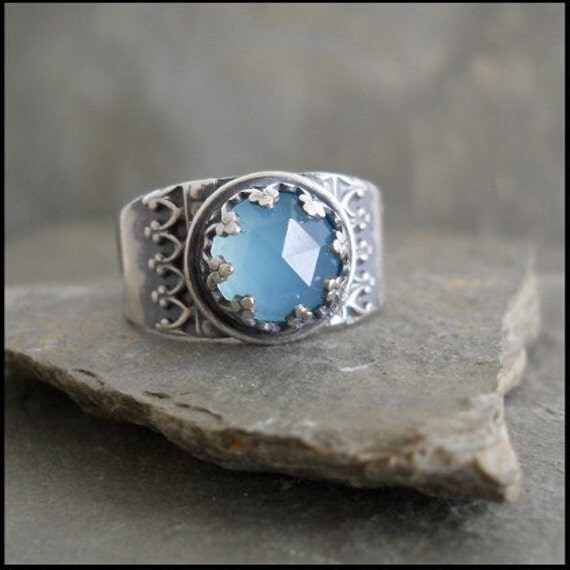
Tiger Bead Store, I have been looking for a tutorial to make a pronged ring. I have found very few, so I think I will be creating my own design. If I am successful, I will share my creation here.
I found really good information about wire wrapped jewelry and it's history on
Wikipedia. I thought it was very interesting so I wanted to share it here.

"
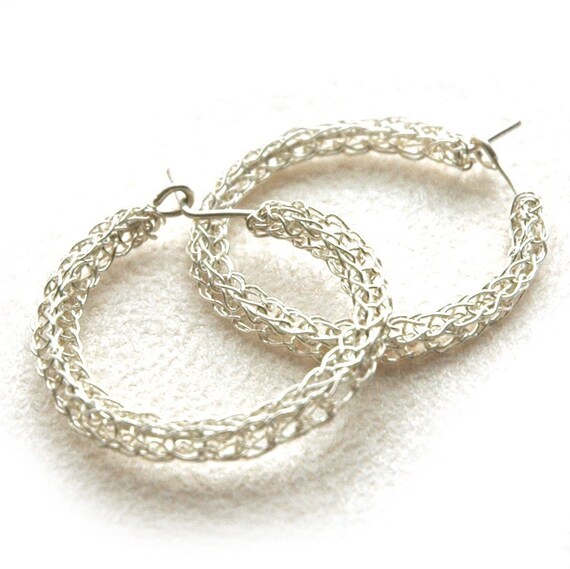
Wire wrapping is one of the oldest techniques for making jewelry by hand. In wire wrapping, jewelry is made using jewelry wire and findings similar to wire (like head-pins) to make components. Wire components are then connected to one another using mechanical techniques with no soldering or heating of the wire. Frequently, in this approach, a wire is bent into a loop or other decorative shape and then the wire is wrapped around itself to finish the wire component making that loop or decorative shape permanent. Because of this technique for wrapping wire around itself this craft is called wire wrapping.
HistoryExamples of wire and beaded jewelry made using wire wrapping techniques date back to thousands of years BC. The British Museum has samples of jewelry from the Sumerian Dynasty, found in the cemetery of Ur that contain spiraled wire components. This jewelry is dated at approximately 2000 BC. Other samples of jewelry from Ancient Rome show wire wrapped loops (one of the important techniques in making wire wrapped jewelry). This Roman jewelry is dated to approximately 2000 years ago. In the manufacture of this early jewelry the techniques for soldering did not exist. Later, as the technique for soldering developed, the wire wrapping approach continued because it was an economical and quick way to make jewelry components out of wire.
Currently, wire wrapping techniques are not frequently used for mass produced jewelry because of simple economics. Machines can cast jewelry components much faster and cheaper. Artisans or craftsmen are required to make jewelry by hand and in the current mass marketplace machines are less expensive and perhaps more precise. At this time, using the wire wrapping approach to making jewelry is primarily employed by individual craftsmen and women.

The craft of wire wrapping has not been precisely defined and for this reason it is difficult to define unequivocally. The key differences between making jewelry by wire wrapping and other approaches to making jewelry are two-fold;
1. Wire wrapped jewelry is made of wire and findings similar to wire (head-pins, jump rings, etc.)
2. Wire wrapped jewelry is made using mechanical connections between components and without soldering or other heat treatments.
A key element in wire wrapped jewelry is a loop made in a segment of wire. In general, loops in wire are connected to one another to make the mechanical connections between components. A loop can be something as simple as bending the end of a piece of wire until the very end of the wire is bent far enough that it touches the wire itself. This simple form of a loop is called a “P” loop. A “P” loop is a loop in the wire in the shape of the letter “P”. Another form of a loop is an eye loop. An eye loop is a more complex loop with a full circle of wire centered over the stem of wire just like a lollipop.
In their basic form, P loops and eye loops are “open” loops. This means that the loop can be opened mechanically to allow it to connect to another component. The opposite of an open loop is a closed loop. In a closed loop, the end of the wire is wrapped around the stem of the loop so that the loop is permanent and can’t be opened. A closed loop is also called a wrapped loop and it is this technique that resulted in this approach to making jewelry being called wire wrapping.
Given that wire wrapped jewelry is jewelry made of wire with mechanical connections instead of soldered connections. A mechanical connection is simply connecting an open loop to another loop, or connecting a wrapped loop to another loop during fabrication before the wrapped loop was wrapped closed. In the simplest example of hand made, wire wrapped jewelry, a bead is threaded onto a jewelry making finding called a head–pin. The bead is held in place by the “head” on the head pin. The portion of the head pin coming out of the opposite side of the bead is essentially wire. This wire is bent into a loop using hand tools and the excess wire is cut off. The resulting bead hanging from a loop is called a “bead dangle”. To complete a simple earring, the loop in the bead dangle is connected to the loop at the end of an ear wire finding leaving a completed earring.
Frequently when making a wire wrapped bracelet or necklace, one would use wrapped loops to connect the components into a chain. For bracelets and necklaces, wrapped loops are recommended because open loops could be pulled apart if the chain were to snag.
ToolsThree tools are essential and several other tools are useful in the construction of wire wrapped jewelry. The basic tools are a flush cutter, round nose pliers and chain nose or bent chain nose pliers. A flush cutter is a special type of cutter that leaves one end of the cut wire flush or flat, while the opposite end of the cut wire is sharp or pointed. Round nose pliers are pliers with conical jaws and are used for making loops in wire. Chain nose or bent chain nose pliers have flat smooth jaws and are used for gripping and holding wire and for bending wire.
Other useful tools used in making wire wrapped jewelry are nylon jaw pliers, a ruler, step jaw pliers, a chasing hammer, an anvil or bench block, a cup bur, loop closing or bent closing pliers and a jewelry making jig.
Wire
Wire is available is various shapes, such as round and square, and patterns, such as flat and pre-twisted. It is also available in a variety of materials. Copper and brass wire are easy to shape and manipulate. Copper wire can be hammered quite thin. Brass wire is a little stiffer than copper, but it can be manipulated very easily. Sterling silver is soft enough to manipulate, but holds its shape well once it has been formed. Gold-filled wire is made by fusing a layer of 12-karat gold to a supporting material. The bond between the two materials is permanent.
Wire is measured by diameter, which is indicated by gauge numbers. The lower the gauge, the thicker the wire. A 12 or 14-gauge wire is fairly heavy, but ideal for making bangles and chokers. 10-gauge wire is very thick and stiff, while 26-gauge wire is very fine, almost as thin as hair. This thin wire is well-suited for coiling embellishments. 16-gauge wire is good for making jump rings and links for necklaces and bracelets, and 18-gauge wire is good to use for adding embellishments and making finer links.
* Memory Wire is a rigid, pre-coiled wire that makes it easy to create finger and toe rings, bracelets and necklaces.
* Beading Wire is a twisted stainless steel wire with a nylon coating. It is good to use with abrasive beads. A thinner wire will give an appealing drape to lightweight beads such as gemstone heishe, liquid gold, or liquid silver and bugle or seed beads. A thicker weight wire should be used to accommodate larger, heavier bead strands.
* Super-thin Beading Wire is a 34-gauge wire that can used for forming shapes and weaving around findings. Because it is so fine, this wire will fit through almost any drill hole. It is to be used with lightweight beads only as it is very thin and doesn't have much tensile strength.
* Color-Coated Copper Wire (also known as Enameled Copper Wire) is copper based crafting wire that is soft, extremely malleable and retains shape moderately well.
* Precious Metal Wire - sterling silver, fine silver, and gold are the most common - is used for wire-wrapping, chain-making and other jewelry construction. It is available in four shapes, round, half-round, square and twisted.
Precious Metal Wire also comes in three hardnesses, dead soft, half-hard and full hard.
* Dead Soft wire is extremely malleable and can be bent easily into a variety of shapes. It does not hold its shape well at stress points such as clasps.
* Half-Hard wire is malleable; however, it will maintain in intricate shape under moderate stress. It is useful for weight-bearing parts of wire-wrapped jewelry.
* Full Hard wire holds its shape for wire-wrapping jewelry. Its tempered nature holds intricate designs well, and is excellent for clasps.
SuppliesFor making wire wrapped jewelry the basic component is wire. If a person was interested, they could make all the items necessary for making earrings, bracelets and necklaces out of wire. There are several jewelry components that have been pre-made and are sold to help facilitate making jewelry. Most of these pre-made components come under the generic name findings. The most important findings used in making jewelry are ear wires, clasps, head pins, and jump rings.