Showing posts with label birthstones. Show all posts

Wednesday, November 19, 2014

November's Birthstone, Citrine

Citrine Bullet Cabochons
Citrine is one of two birthstones for November.  The word citrine stems from the French word for lemon, and citrine gemstones range in color from pale yellows to deep oranges.

Citrine is any quartz crystal or cluster that is yellow or orange in color.   Most citrines on the market have been heat treated.   Specimens of low grade, inexpensive amethyst or smoky quartz are often cooked at high temperatures to produce the more profitable orange yellow citrine.   This is because natural citrine is found only in large quartz deposits in small amounts.  Citrines whose colors have been produced by artificial means tend to have much more of an orange or reddish cast than those found in nature, which are usually a pale yellow. 

In many amethyst deposits, the amethyst has been partially or fully changed to a darker brown citrine due to naturally occurring high temperatures, thereby changing the amethyst into natural citrine.

Citrine is found most frequently in Brazil, Bolivia, and Spain.

Citrine Round Cabochons
Citrine is often confused with the more expensive orange-yellow topaz and is at times sold as topaz by unscrupulous dealers.  The finest citrine gemstones have a pure yellow color that cannot be duplicated by golden topaz, which will always have hues of orange or brown to darken the gem.

Known as the "healing quartz," this golden gemstone is said to support vitality, energy and health while encouraging and guiding hope, energy and warmth within the wearer.


Information shared from:  

Bernadine Fine Art JewelryAmethyst Galleries, Inc. and The AmericanGemSociety

Thursday, September 18, 2014

September's Birthstone, Sapphire

Sapphire, September's birthstone,  is a form of the mineral corundum, a normally drab grey mineral. Red corundum is called the ruby, while all other gem quality forms of corundum are called sapphires.

Typically, sapphires appear as blue stones, ranging from very pale blue to deep indigo, due to the presence of small amounts of titanium and iron within the crystal structure. The most valued shades of blue range from the medium-deep cornflower blue to medium dark blue, or slightly violetish blue.

Sapphires also occur in other natural colors and tints – colorless, gray, yellow, pale pink, orange, green, violet and brown – called fancy sapphires. These different colors are caused by different kinds of impurities within the crystal. For example, yellow sapphires get their color from ferric iron, and colorless gems have no contaminants.

The biggest source of sapphires world-wide is Australia, especially New South Wales and Queensland.   Australian sapphires typically are blue stones with a dark and inky appearance.   In India, Kashmir used to be a well-known source of the cornflower-blue stones. In the United States, a major source is the Yogo Gulch Mine in Montana that mostly yields small stones for industrial use.

Sapphires are commonly heated to improve their color and reduce cloudiness that is caused by inclusions. The inclusions are responsible for the "star" or "cat's eye" in star sapphires. 

One of the most famous sapphires rests on the Imperial State Crown, worn by Queen Victoria in 1838. It resides in the British Crown Jewels in the Tower of London. This gem is called the St. Edward’s Sapphire because it once belonged to Edward the Confessor, who wore the stone on a ring during his coronation in 1042.

(Parts of this post are being shared from the website Earthsky.org)


Friday, July 11, 2014

July's Birthstone, Ruby


 July's birthstone, the ruby, is among the most highly prized of gemstones. Large rubies are harder to find than large diamonds, emeralds and sapphires. As a result, rubies’ value increases with size more than any other gemstone.

Ruby is a pink to blood-red colored gemstone, a variety of the mineral corundum, also known as aluminum oxide.  The red color is caused mainly by the presence of the element chromium. It is harder than any natural gemstone except diamond, which means a ruby is durable enough for everyday wear.


 Prices of rubies are primarily determined by color. The brightest and most valuable "red" called pigeon blood-red, commands a large premium over other rubies of similar quality. After color follows clarity: similar to diamonds, a clear stone will command a premium price.  Cut and carat weight would be the last determining factors in pricing a ruby.

All natural rubies have imperfections in them, including color impurities and inclusions of rutile needles known as "silk". Gemologists use these needle inclusions found in natural rubies to distinguish them from synthetics, or substitutes.  Almost all rubies today are treated in some form, with heat treatment being the most common practice.  Rubies that are completely untreated and are of excellent quality, command a large premium.


Rubies come from all over the world but good gemstones are found in India, Madagascar, Zimbabwe, North Carolina in the U.S., Afghanistan, Pakistan, Sri Lanka, Kenya, Tanzania, Kampuchea, and perhaps most notably, Burma.  The Mogok valley of Upper Burma is famous as the source for the finest and rarest rubies of all, the pigeon blood-red,  named for the stones’ intense red color. Another major source of rubies is Thailand, well-known for dark, brownish-red rubies. Both Thailand and Burma regard the ruby as their national stone.

(Information shared from the websites:  American Gem Society and Earth Sky.)


Tuesday, August 13, 2013

Folklore of Peridot, August's Birthstone

Peridot was considered a very spiritual stone in Ancient Egypt. Egyptian priests would brew a strong drink from the crushed up stones and partake of this hot beverage during ceremonies. It was believed that drinking peridot brought them closer to nature.  Egyptian priests also drank from cups lined with peridot to heal maladies and pay tribute to the goddess Isis.

Cleopatra, the queen of Egypt, had a deep love of peridot. While many sources from the time describe her as bejeweled in emeralds there is much archaeological evidence that the stones people were taking as emeralds were actually peridot.

Peridots were often mistaken for emeralds.  In fact, the Romans called them the “evening emeralds” because of the way they caught and reflected lamplight.  There was a long held belief that peridot burned with an inner fire that would glow at night.  In some ancient cultures miners searched for peridot during the early evening or at night when they said it was the easiest to find.

Crusaders invading Egypt during the Middle Ages found the peridot mines on Zabargad and brought many of the gems back with them to Europe.   These were used to decorate their churches.  These stones had already played a heavy role in Christianity and appear numerous times in the Bible under the name chrysolite.  Aaron the Priest, brother of Moses, wore a peridot into battle. Peridots represent purity in Christian folklore and commonly ornament high-ranking Catholic Church officials.


 In Hawaii, peridots are rare, but as one of the few natural gems found on the islands, they quickly became a treasured part of native mythology. Tiny peridot pebbles washed up onshore, causing the Hawaiians to believe they were the tears of the goddess Pele.  Pele is associated with fire, lightning, and volcanoes.  In many stories Pele is a destructive goddess, but as the Hawaiian Islands themselves were formed from the explosion of the volcanoes beneath them, the Hawaiian people felt Pele was generous as well.  Peridot is one of the gifts it is said the goddess gave to the Hawaiian people.

Throughout history it was believed that peridot could cure respiratory problems such as asthma and that the gemstone acted as a salve to heart troubles. In the Middle Ages, peridot was placed under the tongue of sick people to reduce fevers.

Modern day belief regarding the peridot says that wearing one brings good luck and peace, as well as stronger friendships, success, and a knack for attracting wealth.   In modern new age tradition it is also supposed to help soothe the wearer to deep sleep, to dispel negative energy, and calm anger.


Information shared by:  Renee Mallett for Examiner.com and JewelryNotes.com

Tuesday, August 6, 2013

August's Birthstone, Peridot

Peridot is the official birthstone for the month of August as adopted by the American National Association of Jewelers in 1912.

Peridot is one of the few gemstones that occur in only one color, an olive green. It is an Iron Magnesium Silicate, and the intensity and tint of the green depends on how much iron is contained in the crystal structure.  The color of individual peridot gems can vary from yellow- to olive- to brownish-green, with the darker shades of olive-green being the most prized.  Because it is similar in color to an emerald, peridot stones are often confused with emeralds, and some famous emeralds have turned out to be peridot.

From ancient times and in fact right up until the eighteenth century, Peridot was referred to as topazion or topaz.  The reason for this is believed to be because it was discovered on the island of Topazios, which today is commonly known as St. John's Island in Egypt.  Mining for this gemstone was extremely dangerous work as the island was infested with poisonous snakes, though they were later driven into the sea by a Pharaoh.

Egypt's St. John's Island historically was the major supplier of Peridot though this supply has since been exploited and sources have been depleted. Today China, Pakistan, and the United States are all vying for the title of the world's largest Peridot supplier. There are also known supplies of Peridot in Africa, Australia, Germany, Italy, Myanmar (Burma), Norway, and Sri Lanka (Ceylon).

Peridot can be a difficult stone for a gem cutter to cut due to the fact that it's rough crystals are quite easy to break.  Stones that contain numerous or heavy inclusions are generally cut as cabochons. The reason for this is that this shape provides the best possible appearance and helps to disguise inclusions.

Occasionally Peridots are enhanced with colorless oils or resins which reduce the visibility of the inclusions and improve the clarity of the stone. It is also known to occasionally improve the color.

Peridot is rated at a 6.5 to 7 on Moh's Scale of Hardness and while it is generally considered suitable for every day wear, care should be taken when wearing it in situations that could cause chipping or scratching.

Peridots can be cleaned in warm water with a mild detergent and a soft brush, then rinsed with warm water and patted dry. Always avoid ultrasonic cleaners and household chemicals that can effect the color and damage the stone. Peridots should be kept away from excessive amounts of heat and should also be kept away from long contact with perspiration, which can damage the stone over time. It is recommended that your Peridot be kept alone or separated from other jewelry items so as to avoid the gem being scratched.  

Tuesday, July 16, 2013

Folklore of the Ruby, July's Birthstone

Beliefs and legends about the ruby are many.   Here is some of the folklore I was able to find about this precious gemstone.

Some ancient cultures believed that rubies, as well as other gemstones, grew on trees, just like fruit. The rubies would begin budding as small white gems, and would slowly grow and ripen, turning red in the light of the sun. When the ruby was saturated with red color, it was ready to be plucked.

It was believed that the person who possesses a good-quality ruby will live a life of peace and harmony. He or she would be protected against all danger and calamities, and would be blessed with good health, as the ruby wards off all evils.  

In the Orient, rubies were once believed to contain the spark of life – “a drop of the heart’s blood of Mother Earth,” is how the ruby is described in the Orient.  Ancient Asian stories tell that the ruby was self-luminous. They called it “glowing stone” or “lamp stone.” It’s said that an Emperor of China once used a large ruby to light his chamber, where it glowed as bright as day.

Brahmins – Hindu priests of the highest caste – believed that the homes of the gods were lit by enormous emeralds and rubies.

The Indians call the ruby the lord of the gemstones. The Hindus called the ruby the king of precious stones and the leader of gems. They used to divide rubies into castes, much like social classes. Rubies were sorted into upper class, middle class, and lower class in terms of flawlessness and beauty.  No inferior Ruby was allowed contact with a superior one because it was believed the inferior one would contaminate the better one, thereby diminishing its magical powers.

In India, those who donated rubies to honor Krishna were assured being reborn as an emperor in a future life. Hindus consider light colored rubies to be appropriate for women, and darker ones for men.

In China, a Mandarin’s rank was indicated by the color of the ruby stone in his ring.  A red jewel stone meant he was a key figure among the great.

The ruby is deemed to be the most precious of gemstones by the Bible and the ancient Sanskrit writings.  Indeed, upon discovery of each Ruby crystal, the Indian Emperor would give a special royal welcome to this King of Gemstones  
Ancient Hindus, Burmese, and Ceylonese regarded sapphires as unripe rubies, believing that if they buried the sapphire in the ground, it would mature to a rich red ruby.

In the Middle Ages, rubies were thought to bring good health, as well as guard against wicked thoughts, amorous desires, and disputes.   Rubies, along with other types of red stones, were said to cure bleeding. And it was believed that the ruby held the power to warn its owner of coming misfortunes, illness, or death, by turning darker in color.

Because of their rarity, there are very few famous large rubies.  In his 13th-century books of his travels, Marco Polo relates the tale of a magnificent gemstone – believed to be a ruby nine inches long and as thick as a man’s arm – belonging to the King of Ceylon.  Kublai Khan, the Emperor of China, offered an entire city in exchange for the enormous stone, to which the King of Ceylon replied that he would never part with his prize for all the treasures of the world.

Information shared from:
EarthSky.org
Wiki.Answers.com
Jewelsforme.com


Tuesday, June 18, 2013

Folklore of the Pearl, June's Birthstone

Cultured or freshwater pearls are considered to offer the power of love, money, protection, and luck.

Pearls are thought to give wisdom through experience, to quicken the laws of karma and to cement engagements and love relationships. They are thought to keep children safe.

The Greeks believed that wearing pearls would promote marital bliss and prevent newlywed women from crying.


Ancient Greek mythology taught that pearls were the hardened “tears of joy” that came from the eyes of Aphrodite, their “goddess of love” (much later known to the Romans as Venus) as she was born, rising out of the seas on the giant half shell of a magnificent oyster.  They also believed that wearing pearls would promote marital bliss and prevent newlywed women from crying.

Arabian legend tells us that pearls were formed when oysters were seductively lured up from the depths of the ocean floor by the beautiful moon where they then swallowed moonlit dewdrops that became pearls.

Throughout Asia, pearls were revered as dewdrops from heaven that solidified when they fell into the sea. They were caught by shellfish under the first rays of the rising sun, during a period of a full moon.

Ancient Chinese folklore taught that pearls grew inside the brains of mighty dragons and that they fell from the sky when they fought.

For ages, many Christian scholars referred to the pearl as a symbolic “archetype” representation of Christ, coming into the world under the most humble and lowly of circumstances to bring luminescent light and joy into the world.

Only those with royal status once wore pearl jewelry.  These gems have adorned crowns, clothing, and temples, and were said to be a favorite of Cleopatra.

(Information shared from Bernadine Fine Art Jewelry and The Pearl Outlet.)

Thursday, June 13, 2013

June's Birthstone, Pearl

Another birthstone for June is the pearl.  

The scientific explanation for natural pearls starts with an irritant, such as a small parasite or a fish that lodges in the flesh of an oyster, mussel, or clam, a protective substance called "nacre" is produced.  Over years, layer upon layer of shimmering nacre coats the intruder, creating a lustrous pearl.  Natural pearls are relatively rare

Because of this, a process was created in which a piece of shell or bead was placed inside a mollusk to stimulate the production of nacre.  This results in a cultured pearl, which accounts for about 90 per cent of the pearl industry

Divers find natural pearls in The Persian Gulf as well as in the waters off Japan, the South Pacific Islands off northern Australia, and the coasts of Panama, Venezuela, and California.  Most of the cultured pearl industry is in Japanese and Australian coastal waters.  These gems come in a variety of colors, from pure white to pink, yellow, gray and black.  They also come in different shapes and sizes. 

Pearls have been a passion and even an obsession of people throughout the ages.  They have been ground up and used in cosmetics and as a medicine to treat heart and stomach conditions.  Some cultures swear by pearls as an aphrodisiac.   These gems have adorned crowns, clothing, and temples, and were said to be a favorite of Cleopatra.   

Only those with royal status once wore pearl jewelry, but eventually these gems were seen among all classes of people.  They continue to be viewed as a mark of taste and refinement as well as a symbol of purity, and they are often given to celebrate a marriage or the birth of a child. 

Ancient civilizations had many stories to explain the origin of June's birthstone, such as the Greek belief that pearls were the hardened tears of joy that the goddess of love shook from her eyes as she was born from the sea.  According to Arab legend, pearls were formed when oysters were lured from the depths of the ocean by the beautiful moon and then swallowed moonlit dewdrops.  And the Ancient Chinese thought that these gems originated from the brains of
dragons.  

Pearls are nature's perfect gift, suitable for all ages, and elegantly worn with everything from jeans to an evening gown.

(This information is from the website, About Birthstones, http://www.about-birthstones.com)

Monday, June 10, 2013

June's Birthstone, Moonstone

The month of June actually has 3 stones considered to be its birthstone.  One of them is moonstone.  Moonstone is considered a "modern birthstone" by the American National Association of Jewelers in 1912.

Moonstone is part of a family of gemstones known as feldspar.  They range in clarity from semi transparent to opaque and you can find them colorless, and in colors such as mocha brown, yellow, pink, blue, white, orange or peach, gray, green, or silver.  

Rainbow moonstone is an opalescent gem that has a white or blue sheen or shimmer that it reflects under certain lighting conditions.  This shimmer looks like the stone has a glow from within.   This glow is called adularescence.   The most highly valued rainbow moonstones would be colorless, semitransparent to nearly transparent, without visible inclusions, and a vivid blue adularescence, also known as blue sheen.

Along with adularescence, some moonstones show chatoyancy, also called the cat’s-eye effect.  I have found this more in the peach and gray shades of the moonstone. 

Around 100AD, moonstone was used in jewelry by the Romans who believed that the stone was formed by the light of the moon. In India, moonstone is considered a sacred and magical stone. It is believed to bring good fortune, enhance passion, protect women and children, mothers and babies, and to balance the emotions.  A gift of this stone is symbolic of health and longevity.   Moonstone was very popular during the early 20th century and was used extensively in art nouveau jewelry.

Moonstone is not very durable or hard gemstone compared to other gems used for jewelry.  Use a bit of caution and care in handling this gem or a piece of jewelry with this gem in it.  Do not use any harsh chemicals or cleaners to clean your gems. Avoid using ultrasonic cleaners or steamers. Simply use a mild soap and a soft cloth to clean your gemstones. Rinse well under warm water your gemstone to remove any soapy residue. Moonstone is considered sensitive to pressure, so do not set your stones using  tension-style mountings. Always remove moonstone jewelry before exercising, playing sports or performing household chores. When storing your moonstone, store them separately and away from other types of gems and jewelry, whether harder or softer. If possible, wrap your stones individually using a soft cloth, or you can place them inside a fabric-lined jewelry box for added protection.


The highest quality moonstones are found in Sri Lanka and India.   Other notable sources include Australia, Brazil, Germany, India, Myanmar (Burma), Madagascar, Mexico, Norway, Switzerland, Tanzania, and the United States.  Rainbow moonstone can be found in Brazil, Europe, India, Australia, Germany, Madagascar, Mexico, Myanmar, Tanzania, and Pennsylvania and Virginia in the U.S.


Thursday, May 9, 2013

May's Birthstone, Emerald

Emerald is the birthstone for the month of May. Emeralds are part of the Beryl family of minerals. It's green color is caused by the addition of chromium and iron to it's mineral structure during it's formation. How much or how little of these other two minerals will determine how deep green the emerald will be. And with emeralds, the deeper the green, the more valuable the stone.

Emeralds are known for having inclusions (flaws and veins of chemicals). This is a natural part of the stone and does not take away from the it's value. It is actually proof that the stone is genuine.


A green colored oil is often used to enhance the color of the emerald. The oil also fills in any cracks or fractures the gem may have. It is recommended that the emerald be cleaned with a soft, dry cloth. Do not use cleaners, chemicals, hot soapy water, or an ultrasonic cleaner on your gem. This can remove the oil and make the fractures more visible. The oil may also evaporate as the gem ages. In this case, use a high-grade mineral oil to enhance the stone.


Be very careful when wearing an emerald. They are one of the softest gemstones and dropping, banging it against a hard surface, and even extreme temperatures can create internal cracks within the stone.

The earliest findings of emerald mines were in Egypt around 2000 B.C. The Egyptian Queen Cleopatra was known to have the most famous mines. She was known for wearing lots of large emerald jewelry and for giving the gem away to her important visitors. Emeralds have also been found in mines in Siberia, Afghanistan, Pakistan, Brazil, Australia, Russia, Zimbabwe, Columbia, and in North Carolina in the US.

According to legend, the emerald strengthens memory and intelligence. It is said to drive away evil spirits and aid in predicting the future. Healers believe the gem is useful in healing relationships, for over all health, and specifically for the heart.

Bookmark and Share

Sunday, April 7, 2013

April's Birthstone, Diamond


Lucky April! Their birthstone is the diamond. And who doesn't like a beautiful, sparkling, brilliant diamond? I know I certainly do.

Diamonds were originally discovered in India about 2500 years ago. The diamond derives its name from the Greek, "adamas," meaning "unconquerable the eternity of love." It is the hardest and purest gemstone known to man. Most diamonds known to the average person are clear and colorless, but there are other varieties and colors such as brown, black, gray, yellow, red, green, pink and blue. Their colors are determined by the impurities found in the stone.

The value of a colorless diamond is decided by the 4 Cs, cut, color, clarity and carat.

Cut will decide the brilliance of the diamond. During the process of cutting the diamond, the jeweler is making every effort to maximize the amount light the stone will reflect back to the viewer. Most diamonds have 58 carefully cut flat surfaces, called facets. the placement of the facets will determine the stones fire, brilliance and beauty.


A diamond is more valuable when it is colorless. Depending on the quality of the diamond, all the colors of the rainbow will be reflected back to the viewer. Diamonds are graded in color on a scale from totally colorless, near colorless, faint yellow, very light yellow to light yellow. Experts grade a diamond by comparing it to a master diamond of known color.

Clarity depends on the number of inclusions within the stone. The smaller the amount, the clearer, brighter and more costly a diamond is. Flawless diamonds are very rare, and therefore, very costly.

Diamonds are measured in carat weight. One carat is divided into 100 points, and therefore, a quarter carat diamond has 25 points, and so on. The size of a diamond is significant only when the other qualities are considered. So you can have a large diamond that is expensive or inexpensive depending on also the cut, color and clarity.
Bookmark and Share

Thursday, March 21, 2013

March's Birthstone, Aquamarine: Folklore and Healing Qualities

"There are many myths and legends about the aquamarine stone. The Romans believed that if the figure of a frog were carved on an aquamarine, it served to reconcile enemies and make them friends. Another Roman legend stated that the stone absorbs the atmosphere of young love: 'When blessed and worn, it joins in love, and does great things.' Aquamarine was also considered the most appropriate morning gift to give to a bride by her groom following the consummation of their marriage. The Greeks and the Romans knew the aquamarine as the sailor’s gem, ensuring the safe and prosperous passage across stormy seas. In Medieval times, the stone was thought to reawaken the love of married couples. It was also believed to render soldiers invincible.

The Sumerians, Egyptians, and Hebrews also admired and valued aquamarine greatly. It was a symbol of happiness and everlasting youth. In the Christian era, the aquamarine was identified with the Apostle, St. Thomas, because it 'imitated the sea and the air' and the Saint 'made long journeys by sea, even to India, to preach salvation.' Identifying a certain jewel with one of the twelve apostles was a common practice at that time. William Langland’s 'The Vision Concerning Piers and the Plowman,' from 1377, mentions the aquamarine as an antidote for poison. This antidote was widely known throughout Europe. Because there was a wide amount of poisonings amongst royalty at the time, the gem was in popular demand just for that purpose. It was not necessary to pulverize the stone, as it was/ is with other gemstones. Simply wearing the stone as a pendant or in a ring was just as effective.

Writers of the middle Ages claimed aquamarine was the most popular and effective of the 'oracle' crystals. When cut as a crystal ball, it was thought to be a superior stone for fortune telling. Many methods of using the stone as a divining tool were described in ancient literature. One method involved hanging a stone by a thread over a bowl of water, just touching the surface. The inner edge of the bowl was covered with the characters of the alphabet. The diviner was to hold the top of the thread and allow the stone to hit certain letters, which would spell out answers to an important question, sort of like a ouija board. Another method was to cast a crystal into a bowl of pure water. The disturbances in the water would reveal messages on the surface of the liquid. Aquamarine’s powers of revelation were also said to help one in search for lost or hidden things.

According to folklore, aquamarine would bring victory in battles and legal disputes. The gem was also credited with curing belching and yawning and was considered especially effective for curing ailments of the jaws, throat, stomach, liver and toothaches. Aquamarine was also used in ceremonies in the belief that it would bring rain when needed, or visit drought upon their enemies. When worn as an amulet, it was believed to bring relief of pain and to make the wearer friendlier, quicken the intellect and cure laziness. The ancient philosopher Pliny paid tribute to this gem of vitality, stating, 'the lovely aquamarine, which seems to have come from some mermaid’s treasure house, in the depths of a summer sea, has charms not to be denied.' ” (1)

"According to some legends, aquamarine is the treasure of mermaids, with the power to keep sailors safe. Supposedly its' powers are particularly strong when immersed in water. While on land, it is said to have a soothing influence on married couples. The ancient Romans believed that the Aquamarine was sacred to Neptune, the god of the sea, having fallen from the jewel boxes of sirens and washed onto shore. Early sailors wore aquamarine talismans, engraved with the likeness of Neptune, as protection against dangers at sea." (2)

Information shared from:
(1)www.jewelsforme.com 
(2)www.hubpages.com/hub/Myths-and-Legends-about-Gemstones.com


Tuesday, March 5, 2013

Aquamarine, March's Birthstone

Aquamarine is the birthstone for March. Its name comes from the Latin "aqua," meaning water, and "mare," meaning sea. Aquamarines are available in the pale blues, pale blue-greens, and pale greens. This stone is usually clear, and the iron content of the stone gives it its green color. In the past, green aquamarines were highly valued. Now it is the bluer shades of the stone that are prized. Depending on how you look at the stone, you may see shades of blue so pale it looks colorless. Almost all aquamarines available to consumers have been heat treated to deepen the blue color and get rid of the green color. These gemstones are almost entirely free of inclusions.

An aquamarine is a very hard stone, ranging on the Mohs scale at 7.5 to 8. The hardness of the stone makes it more durable and less likely to scratch.


The best way to clean an aquamarine is with warm, soapy water and an old toothbrush. Be sure to rinse the soap away thoroughly. Be sure to use warm water and not hot. The extreme in temperature for aquamarines, and many other gemstones, can damage the stone. It is best to avoid harsh chemicals and household detergents. An ultrasonic cleaner is also not advisable.

The best quality aquamarines come from Brazil. There stones weighing up to several kilos have been found. Other areas include Nigeria, Zambia, Madagascar, the Soviet Union, Afghanistan, Pakistan, India and the United States.

Wednesday, February 20, 2013

February's Birthstone, Amethyst

The amethyst is the birthstone for February. It is the most highly valued form of the gemstone quartz.  It can range from transparent light lavender to smoky violet to the deepest royal purple, but is best known for it's intense, dark color. The darker the stone, the more valuable it is.

Popular with nobility through the ages, amethyst was considered more valuable than diamonds. The Greeks believed it protected them from intoxication, frequently drinking wine from goblets made entirely of amethyst. The ancient Egyptians believed amethyst could prevent poisoning, and it was a favorite crystal of Cleopatra. Many pharaohs were entombed with the purple crystal. And wealthy Egyptian rulers bestowed gifts of amethyst upon middle class citizens and farmers.


Amethyst is sensitive to heat. In fact, very dark crystals are sometimes heated to enhance their color. If overheated, however, it can change color or lose its color entirely. Sun will also cause it to lose color or become pale. The best advice is to store your amethyst jewelry in a dark area to help it retain its original color.  This birthstone is very hard wearing, and its strength and durability will ensure that it lasts for a very long time.

The healing properties of Amethyst are said to help with sobriety, tranquility, protection and peace. This birthstone has also been linked to improving the skin and preventing baldness, as well as protection from deceit, so it has a lot to live up to!

Tuesday, February 19, 2013

March's Birthstone, Aquamarine on SALE

This is just a quick post to let you know that it is...SALE TIME!!!

***MARCH BIRTHSTONE SALE*** Today through friday, (3/19-3/22) take 20% OFF all purchases of AQUAMARINE gemstones and crystals at Tiger Bead Store! *(Please make your purchase first and the discount will be credited back to your Paypal account or credit card).*

Here is a sample of what I have available:

4mm round cabochons.

Wire wrapped swarovski crystal pendant.

Crystal Swarovski briolette pendant.

Crystal Swarovski briolette pendant.


Swarovski Crystal Pendant  in 8mm and 4mm.


Crystal Swarovski pendant in Baroque style.

Faceted Aquamarine in 4mm and 5mm.

I have more aquamarine cabochons coming in at any moment,  in rose cut and checkerboard.  I will list them as soon as I get them, so that hopefully, they will be a part of this SALE.  

Watch for them in the bead store, or on my Tiger Bead Store Facebook page.  Since I have not been very good about blogging lately, you can find out about new gemstone listings by following me on Facebook.  I am much better about staying up to date with news there.    

Sunday, January 6, 2013

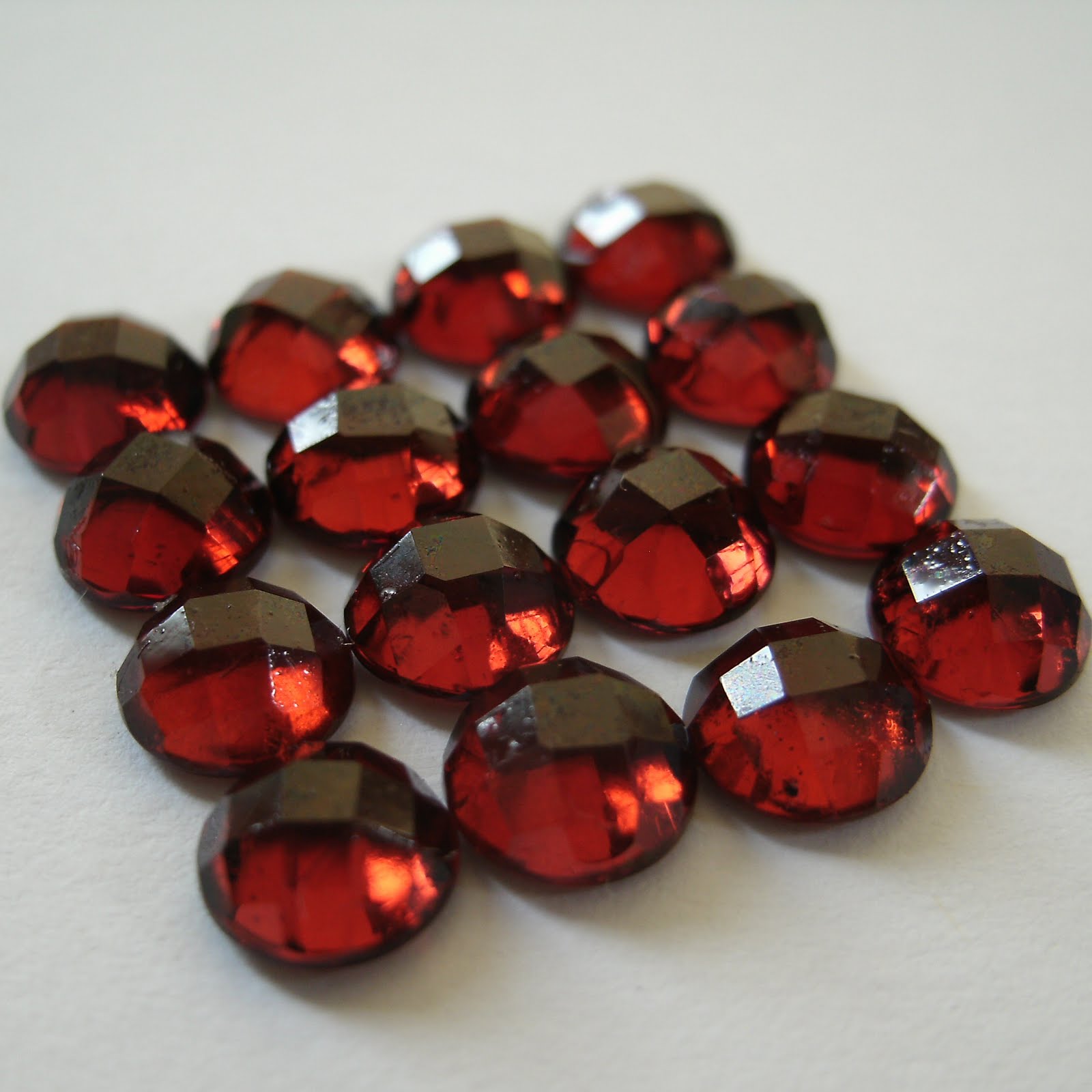
January's Birthstone, the Garnet

The American Association of Jewelers, in 1912, decided which gemstone would be the official stone for each birth month. Garnets, as we know, have been chosen for January. Garnets are also used as gifts for the 2nd and 6th wedding anniversaries.

Garnet is a very durable stone ranging on the Mohs scale of hardness at a 7 to 7.5. The oldest known garnet finding was on a necklace worn by a young man in a grave dating back to 3000 B.C., which is proof of the stones durability.
Garnet is actually the name of a family of 10 different gems that have a similar chemical structure, the main difference between the stones is in the variation of color, density and refractive abilities. Another interesting fact that I did not know about was that the garnet spans a variety of colors, all except for blue. Of course, they are best known in a variety of deep red.

The U.S, (Arizona), South Africa, Argentina, Australia, Brazil, Myanmar (Burma), Scotland, Switzerland and Tanzania are all areas where garnets have been found.

Throughout time, there have been many ancient traditions and legends about the garnet. They were believed to have healing, strength and protective powers. It has been said that the garnet can cure the wearer of all disease and preserve his health, bring him honors and protect him during times of travel. In medieval times, the stones were thought to cure depression and protect against bad dreams. According to legend, Noah used a finely cut, glowing garnet to illuminate the ark during the dark, rainy days and nights. Christian tradition considered the blood-red garnet as a symbol of Jesus' sacrifice. The Greeks believed that it guarded children from drowning.

The King of Saxony is said to have had a garnet over 465 carats in size. I just had to include that fact. I would LOVE to see that. What an incredible stone that had to have been.

HOW TO CARE FOR YOUR GARNET
As with most gemstones, it is important to protect your garnet from harsh blows, extreme temperatures and chemicals. You can clean your garnet with soapy water and a soft brush. Rinse the stone well after cleaning it. You can also use an ultrasonic cleaner for all garnets except the demantoid variety.

Wednesday, July 13, 2011

The Beauty and Meaning of Birthstones

Birthstones have been around since ancient times, and in those days were believed to possess some magical force that could protect the owner or wearer of the stone. These birthstones were traditionally linked to the Zodiac.

However, modern birthstones are linked to calendar months, and each month has its own unique birthstone, with its own fabled properties. Many people love to wear jewelery set with their birthstone, as the ancient meanings and associations with these stones still intrigue them.

Below you will find a listing of each of the birthstones used today.

January
The birthstone for this month is the garnet, which was once thought to be connected with the blood. This stone is supposed to protect the wearer from nightmares and offer guidance through the dark.

Garnets are long lasting and durable gems, with a fiery, ravishing beauty. Garnets are traditionally thought of as deep red, but actually come in a wide range of colors, so there is something to suit every taste for this month.

February
The birthstone for this month is the amethyst, and the folklore attached to this gem associates it with sobriety, tranquility, protection and peace. This birthstone as also been linked to improving the skin and preventing baldness, as well as protection from deceit, so it has a lot to live up to!

The amethyst birthstone comes in varying shades of purple, and can be a pale lilac in color. On the other end of the scale, you can also get deep violet amethysts, which means that you can enjoy a birthstone that is as subtle or as rich as you like. This birthstone is very hard wearing, and its strength and durability will ensure that it lasts for a very long time.

March
This month's birthstone is aquamarine, which has been linked to the making of new friends as well as affection and love, hope and health. This stone was once also thought to protect those at sea.

As the name of this birthstone suggests, it is a green-blue in color and has a rich, sparkling look.  You can get this stone in varying shades of green-blue.

April
One of the most popular gems throughout history, diamonds are the birthstone for this month, and these stones are linked to love, eternity and strength. This has contributed towards diamonds being the most popular gems of all time when it comes to romance, such as engagement rings and wedding bands.

Diamonds are very strong and hard wearing, making them the perfect birthstone to wear on a daily basis. You can enjoy many different cuts of this stone, and the fiery, glamorous sparkle given off by diamonds is positively captivating.

May
This month's birthstone is the beautiful emerald, once linked to health and the curing of ailments, as well as being associated with the ability to see in to the future, giving them an almost bewitching, magical reputation.

These fiery green gems are amazing to look at, and can be found in a variety of shapes and cuts. The beauty and richness of this stone makes it the perfect gem for birthstone jewelery.

June
The elegant pearl is the birthstone for the month of June, and this gem has been linked with chastity and modesty, making it something of an angelic, pure birthstone. They are also linked to successful and happy marriages.

These round, stunning birthstones come in a variety of colors, and a range of sizes. Pearls can look spectacular yet modest in all manner of jewelery from birthstone rings, to earrings and necklace.

July
The birthstone for this month is the ravishing ruby, a stone traditionally linked with protection and harmony. This birthstone has been mined since ancient times, and boasts a spectacular beauty.

Deep red in color,  these gems have a unique, vivid and fiery appearance that would delight anyone.

August
The birthstone for the month of August is peridot, which was commonly linked with protection against evil and night terrors, as well as a gem that enhanced the properties of healing drugs.

Lime green in color, this birthstone is a by-product of volcanic action, and comes in all sorts of shapes and sizes. This birthstone gives off its own unique energy, and is strong and durable.


September
Sumptuous sapphire is the birthstone associated with September, and this gem has been linked with faith and purity, as well as foresight. It was thought that the stronger the sparkle of the gem, the more faithful and honest the wearer.

Sapphires can come in other colors as well as blue. These are strong and durable gems that will last for years to come, and can be passed down to future generations.

October
The birthstone of October is the opal, a stone that has been linked to purity, hope and innocence. This gem has also been linked to healing forces, friendship and emotion, so it has experienced its fair share of folklore over the years.

This type of birthstone comes in white or black, and both variations have remnants of other colors within them. Opals have a unique look and beauty, making them a very interesting birthstone with a strangely exquisite appearance.

November
The birthstone for this month is topaz, once linked with sanity, healing, and life, as well as being connected to strength by the ancient Greeks. This stone has even been linked to an ability to make the wearer invisible in dangerous situations.

This birthstone comes in a range of colors which include golden, blue, pale green, pink and red, as well as some other rare colors. A stunning gem, topaz boasts both beauty and strength.


December
The given birthstone for December is turquoise, and this precious stone was once linked to happiness, fortune and luck, making it a very popular gem in centuries gone by.

Turquoise can range in color from mid-blue to a green-blue or light green color.


(This information written by Antigone Arthuri, and edited by me)

Wednesday, March 23, 2011

March's Birthstone, Aquamarine

Aquamarine is the birthstone for March. Its name comes from the Latin "aqua," meaning water, and "mare," meaning sea. Aquamarines are available in the pale blues, pale blue-greens, and pale greens. This stone is usually clear, and the iron content of the stone gives it its green color. In the past, green aquamarines were highly valued. Now it is the bluer shades of the stone that are prized. Depending on how you look at the stone, you may see shades of blue so pale it looks colorless. Almost all aquamarines available to consumers have been heat treated to deepen the blue color and get rid of the green color. These gemstones are almost entirely free of inclusions.

An aquamarine is a very hard stone, ranging on the Mohs scale at 7.5 to 8. The hardness of the stone makes it more durable and less likely to scratch.

The best way to clean an aquamarine is with warm, soapy water and an old toothbrush. Be sure to rinse the soap away thoroughly. Be sure to use warm water and not hot. The extreme in temperature for aquamarines, and many other gemstones, can damage the stone. It is best to avoid harsh chemicals and household detergents. An ultrasonic cleaner is also not advisable.

The best quality aquamarines come from Brazil. There stones weighing up to several kilos have been found. Other areas include Nigeria, Zambia, Madagascar, the Soviet Union, Afghanistan, Pakistan, India and the United States.

In ancient times, the aquamarine was regarded as a sailor's lucky stone. The Egyptians and Sumerians believed it was a symbol of happiness and everlasting youth. According to folklore, the aquamarine would bring victory in battle and legal disputes. It was also considered an especially effective cure for problems with the jaw, throat, stomach and toothaches. During the Middle Ages, the aquamarine was considered a very popular oracle, and when cut into the shape of a crystal ball, could help predict the future.

According to old traditions, the wearer of an aquamarine was promised a happy marriage. Aquamarine is also considered the anniversary stone for the 19th year of marriage.

Thursday, February 11, 2010

February's Birthstone, Amethyst

The amethyst is the birthstone for February. It is the most highly valued form of the gemstone quartz.
It can range from transparent light lavender to smoky violet to the deepest royal purple, but is best known for it's intense, dark color. The darker the stone, the more valuable it is.

Popular with nobility through the ages, amethyst was considered more valuable than diamonds. The Greeks believed it protected them from intoxication, frequently drinking wine from goblets made entirely of amethyst. The ancient Egyptians believed amethyst could prevent poisoning, and it was a favorite crystal of Cleopatra. Many pharaohs were entombed with the purple crystal. And wealthy Egyptian rulers bestowed gifts of amethyst upon middle class citizens and farmers.


Amethyst is sensitive to heat. In fact, very dark crystals are sometimes heated to enhance their color. If overheated, however, it can change color or lose its color entirely. Sun will also cause it to lose color or become pale. The best advice is to store your amethyst jewelry in a dark area to help it retain its original color.

Tuesday, July 1, 2008

June's Birthstone, Moonstone

Currently one of my favorite gemstones is moonstone. When I found out it was June's birthstone, I knew I wanted to write about it.

Moonstone is part of a family of gemstones known as feldspar. It is an opalescent gem that always has a white or blue sheen that reflects light. It looks like it has a glow from within the stone. In a moonstone, this glow is called adularescence.

Moonstone's clarity ranges from transparent to translucent, and comes colorless, in a milky white, yellow, orange, peach and gray. Moonstone will pick up the colors you wear, which makes it a very versatile gemstone. One of the colors it looks best with is black. The radiance of the stone is stunning with black.

Around 100AD, moonstone was used in jewelry by the Romans who believed that the stone was formed by the light of the moon. In India, moonstone is considered a sacred and magical stone. It is believed to bring good fortune, enhance passion, protect women and children, mothers and babies, and to balance the emotions. Moonstone was very popular during the early 20th century and was used extensively in art nouveau jewelry.

The highest quality moonstones are found in Sri Lanka. It is also found in Brazil, Europe, India, Australia, Germany, Madagascar, Mexico, Myanmar, Tanzania, and Pennsylvania and Virginia in the U.S.